How long does stamped concrete last?
With a solid base and regular sealing, stamped concrete can last many years. Frost, salt and poor drainage shorten its life, so ask your provider about care for your climate.
Request your stamped concrete estimate
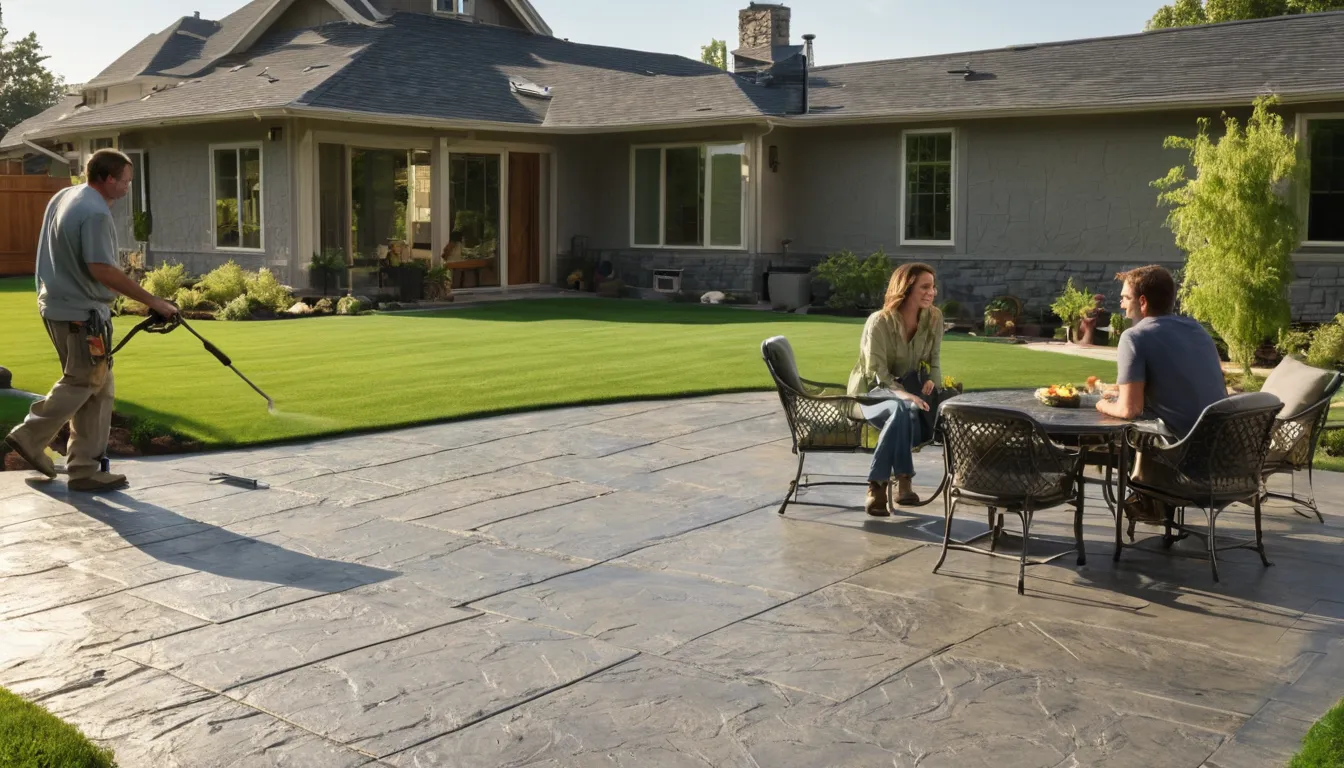
Stamped concrete is regular concrete pressed with patterns and finished with color. It can mimic slate, brick, wood or cut stone. It is popular for patios, walkways, pool decks and driveways. The look is the easy part. The base under it decides how long it lasts.
Trainmatureclients Concrete is a referral service. We do not pour or stamp concrete. We connect homeowners in Edwardsville and the Edwardsville area with independent local providers who do. Plan before pouring: ask about drainage, frost depth, sealing and upkeep first. Then request an estimate with no obligation and compare written quotes.
Stamped concrete is a good choice for many homes. It is also easy to get wrong. A poor base, bad timing or skipped sealer can leave you with cracks and a slick surface.
Base before beauty. Pick the pattern last.
The provider removes loose soil, adds compacted gravel and sets forms. Many pros add steel mesh or rebar for strength.
Color is mixed into the concrete or brushed on top. A release agent keeps the stamps from sticking.
Workers press mats into the surface while it is still workable. Control joints are cut later so cracks follow planned lines.
The slab needs time to cure. Then a sealer protects the color and helps block water.
Concrete does not do well in hard freezes or heavy rain. Cold winters with deep frost mean many providers pause work for part of the year. Hot, humid summers can make concrete set too fast.
Spring and early fall often offer the calmest windows. Severe thunderstorms and hail can strike without warning, so a good provider watches the forecast and covers fresh work.
Common patterns include ashlar slate, running bond brick, cobblestone and wood plank. Earth tones such as gray, tan and charcoal hide dirt well.
Do think about traction. Deep texture grips better than a smooth, glossy finish. Ask for a slip-resistant additive near pools and steps.
If your yard collects water in spring, tell the provider. Slope and drainage matter as much as the pattern. Homes with full basements and sump pumps should route discharge away from new slabs.
Pavers are individual units. One can be lifted and reset if the ground shifts. Stamped concrete is one slab, so it often costs less to install and has fewer joints for weeds.
The tradeoff is repair. A cracked slab is harder to hide than a single paver. Ask each provider to explain both options for your soil and yard.
Most patios take a few days of work, plus curing time. Larger driveways take longer. Many providers ask you to keep foot traffic off for a couple of days and vehicles off for a week or more.
Ask for a clear schedule in writing. Request a callback to check provider availability for your season.
Most sealers wear down. Many homeowners reseal every two to three years. Ask your provider for the right product and timing.
Do not use rock salt or harsh de-icers on stamped concrete. Use sand for grip and a plastic shovel for snow.
Sweep often. Use mild soap and water. Do not use harsh acids unless the provider says it is safe.
Water that gets into a hairline crack can freeze and widen it. Ask a local provider about sealing small cracks before winter.
Ask to see photos of finished stamped work. Ask who handles base prep, how deep the slab will be and how joints are placed. Get the scope, materials and sealing plan in writing.
Do not skip questions about permits or local rules. Providers in our network are independent, so each sets its own terms.
Stone, brick, slate and wood looks pressed into concrete to match your home.
Compacted gravel, forms and slope planning to help the slab handle frost and water.
Integral color, accent tones and textures chosen for looks and slip resistance.
A sealer applied after curing, plus advice on when to reseal your surface.
Prices vary by size, pattern, color, access and local labor. These are typical U.S. ranges only. Always get a written quote that lists materials, base work and sealing.
| Item | Typical range | Notes |
|---|---|---|
| Stamped patio, per sq. ft. | $12 – $20 | Pattern and color add cost |
| Stamped driveway, per sq. ft. | $14 – $24 | Thicker slab, more base work |
| Base prep and grading | $1 – $4 per sq. ft. | Poor soil costs more |
| Decorative borders or accents | $2 – $6 per sq. ft. | Extra labor and color |
| Sealer, first application | $1 – $3 per sq. ft. | Often included in quote |
| Resealing later | $1 – $3 per sq. ft. | Every few years |
Tell us about your patio or driveway, its size, the look you want and your timing.
We connect you with an independent provider in the network who handles stamped concrete.
Review base prep, pattern, sealing and schedule. Ask questions before you agree to anything.
Ask the provider for sealing and winter care tips to protect the new surface.
Clear do and do not tips help you avoid costly mistakes before work begins.
Independent providers in our network know regional frost and weather.
Request an estimate and compare quotes with no obligation to hire anyone.
Simple care tips help protect the finished surface through every season.
Send a short request about your new driveway or patio. A local provider in our network will follow up. There is no obligation.
No obligationWith a solid base and regular sealing, stamped concrete can last many years. Frost, salt and poor drainage shorten its life, so ask your provider about care for your climate.
Fresh concrete can be damaged by freezing temperatures, so many providers avoid hard-freeze periods. Some use special mixes or covers in cool weather. Ask the provider what they recommend for your site and season, and get the plan in writing.
A glossy sealer can be slick when wet. Ask for a slip-resistant additive or a textured finish, especially near pools, steps and sloped areas, and avoid heavy gloss there.
Send a short request about your new driveway or patio. A local provider in our network will follow up. There is no obligation.
No obligation